Showing posts with label Tricks for young players. Show all posts

Sunday, May 19, 2024

Dream big, young scientists

Looking back through old journals for something entirely different, I found the following research proposal that I wrote in Oct-Nov of 1996, shortly before I got awarded my PhD scholarship. It was a pretty good scholarship I got, so I'm repeating this in case anyone else wants to aim high in the planetary science field: 

Knowing the chemical and isotopic composition of the whole Earth would help constrain the mechanics, timing, and efficiency of differentiation and core formation, as well as give valuable information on the partitioning of siderophile elements into the core. Unfortunately, directly sampling the core is impossible using current technology. Many substitutes of this have been explored, including the analysis of the undifferentiated chondrites and the study of iron-nickel meteorites thought to be pieces of a demolished differentiated planetary body. 

Sadly, oxygen and other isotopes show that these objects formed in a region of the solar nebula different to the Earth, and thus their compositions cannot be directly compared to that of the Earth-Moon system without extrapolation. Since the Moon dies not include a substantial iron core, any determination of the whole Earth, or whole Earth-Moon system composition must include the Earth. 

Our proposal is to use Whole Earth Laser Ablation (WELA) ICP-MS to determine the chemical and isotopic composition of the entire planet. Building the mass spectrometer for this will be an easy task, as the Earth is already located in an extremely good vacuum. We are merely asking for enough funding to purchase a laser powerful enough to ablate the planet, so that the resulting plasma can be sampled by our mass spectrometer. We believe that based on its excellent performance in the Alderaan System, the purchase of a Death Star would allow us to use its primary weapon as our Earth-ablating instrument. We ask that you fund the acquisition of this tool, as we believe it will fundamentally alter the way we view our planet.

Saturday, February 03, 2018

Nominating for society prizes


One of the great things about being a geochronologist is that you can delve back in time to when unfinished blog posts were abandoned, and drag them screaming into the present to be finished.

Sometime around about 0.0000035 Ma*, there was a push by Dr. Ball over at Magma cum Laude bemoaning the gender disparityin society prize nominations. The argument, seen here and other places in early 2014, goes something along the lines of:
-When nominated, women are about as likely as men to win society awards.
-However, nominations skew more male than the general population of scientists
-Nominators are mostly crusty old farts, and young scientists (young meaning anyone under 50) are not stepping up and nominating people.

I forgot all about this pressing issue until June (still 2014), when the MGPV division of the Geological Society of America announced that they would be awarding a new early career scientist prize. At that point, I suddenly recalled the issue, and thought, “Might this be a testable hypothesis? What happens when some random industrial scientist barely 40 years old tries nominating?”

I’d sat through a few award ceremonies before, and seen these sorts of things handed out to a wide variety of scientists, from really cool people I’d never heard of to the banal big names who had spent a quarter of a century cruising on achievements from when I was in high school. But in most cases, the nominees were very senior, old, respected scientists. And they nominated other, slightly less old but otherwise very similar scientists. I suppose their point of view is that if they’re great, other great people ought to be pretty similar.

I am not a great scientist. I’m a disorganized industry hack whose H-index can be tallied on the fingers of Count Rugen’s hand. So the way I see it, anyone I nominate for a prize should be as unlike me as possible. So from there it was an easy step to revisit the nomination gap studies, and think, “Might there be, perhaps, any women who would be appropriate for this award?” Luckily, our nominee came to mind almost immediately.

As someone who went through college loathing political correctness, my first thought was therefore, “OK, now am I cutting any more deserving nominees out here by nominating her?” As it turns out, when I was still working at the ANU (see the first three years of this blog) we had many really good grad students. However, none of them really took ownership of their favorite field of science and made it their own the way our nominee did, so I was satisfied that I had made a good choice.

The GSA Junk Mail that announced the creation of a new award came out in June 20 of 2014, I probably read it and connected it back to the earlier exhortations to nominate about a week or two later, around the end of the month. The trouble was, the deadline for nominations was the 15th of July. And I didn’t start approaching people for supporting letters until the second.

My strategy was simple: Here in Canberra, cruise the ANU hallways to figure out who was actually in town and able to put something together on zero notice. I threw the Japanese postdoc into the too-hard basket, as I didn’t personally know any of the people she worked with there, and also language barrier, and concentrated on her colleagues at DTM. I also approached some big names in the field with whom she hadn’t collaborated, to see if they thought it was a sensible nomination and would be willing to write something supportive from more of a peer review perspective.

I was pleasantly surprised at how enthusiastic most of the people I approached were. I guess the good thing about picking a good candidate, however, is that people really do get excited and are willing to get on board and turn letters around in remarkably quick timescales. I had my three supporters lines up by the seventh, and three letters in hand within hours of the deadline. In responsible, organized nominator fashion, I had my nomination letter done a whallopping three days before the deadline, and circulated it to the rest of the team for a science check and general feedback (as I had never done this before).

Around the time of the deadline, a potential referee who had been out of contact emailed me saying that he really wanted to write a fourth letter, and could the deadline be extended? So I asked the coordinator, and he said that as long as a complete submission package was in on time, we could have a week or two to get additional bonus letters in. One such letter was submitted.

Fast forward nine months:
There’s an email in my inbox from our nominee:
Hi Chuck,
Here is the letter that I woke up to today!!!! Thanks so much!!!”

And that is how Dr. Frances Elaine Jenner won the Geological Society of America’s inaugural MGPV early career award. The only sad part of the story was that I was not able to go to the GSA meeting where the award was presented, so one of the guys who wrote a letter of support gave the citation. He’s a proper academic scientist anyway, so probably had the gravitas that I lack. The citation and acceptance are on page 8-10 of thisnewsletter.

The point of all this story is this: It is possible for mid career non-academic scientists to throw together a nomination at the last minute, and get support from respected scientists, and construct a nomination package sufficient to win the prize. Don’t die wondering, folks.

Now, I should point out that I did have a few things tilted in my favor:
Firstly I attended a number of top institutions during my academic career, which put me in contact with top scientists like Dr. Jenner. Having a great candidate goes a long way towards making a case.

 Secondly, I’ve been kicking around science in one capacity or another to know her referees, several of whom were quite respected scientists. I was reasonably acquainted with three of the four supporters I got letters from, and had at least been to the fourth guy’s lab.

Thirdly, once the decision was made to go, I went all out. This isn't the sort of thing to be half-assed. I read all her papers, and tried to put together a passionate yet logical case for why they made our nominee a prizeworthy scientist.

I’m sure the greybeards who get together at annual meetings to sip nasty scotch plan out their conventional safe picks way in advance, but with a little passion, some broad thinking, and a genuine enthusiasm for science, anyone can nominate for their respective society’s awards, and win. And there’s a month and a half to go before the deadline forthe 2019 award, so don’t be shy, y’all.

* True calendar years; -0.000064 using the 1950 zero year favoured by 14C weirdos.

And in case anyone wants the really nitty gritty details, here’s the nomination I wrote in a sleep deprived haze during the first week of July 2014. Typos and all:


Nomination for Frances Jenner

Dear Division Secretary,
I would like to nominate Frances Elaine Jenner for the GSA’s MGPV division early career award for 2015.  Dr. Jenner is an outstanding young analytical geochemist who has pioneered several novel analytical techniques and applied them to igneous rocks from a wide temporal and geographical range.  Her ability to generate novel, high quality data has allowed her and her colleagues to overturn previous assumptions or hypotheses about a variety of igneous processes, giving us a better understanding of mafic volcanism over the last 3.8 billion years of Earth history.

Upon the completion of her PhD on the nature of Eoarchean rocks (Jenner et al., 2009; Jenner et al., 2013), Dr. Jenner immediately branched out into a new field of study, namely the quantification of “less commonly analyzed elements” in volcanic glasses. One such element is selenium.  In theory, selenium should be a useful proxy for sulfur in systems (such as volcanic glasses) which may have undergone partial degassing, but in practice, there was no standard analytical protocol for measuring this low abundance chalcogenide in silicate materials.  Using the electron microprobe, laser ablation inductively coupled mass spectrometry (LA-ICPMS), and the Sensitive high-resolution ion microprobe (SHRIMP), Dr. Jenner characterized a suite of commonly used reference materials (Jenner et al., 2009). This study remains the only case where the SHRIMP has been used as a negative ion trace element quantification tool.  However, despite developing this novel SIMS technique, she and her colleagues used the SIMS data to devise an analytical protocol to routinely measure selenium using LA-ICPMS. The use of the cheaper, more versatile LA-ICPMS equipment meant that selenium contents of target glasses and minerals could be determined along with other elements of interest in a wholescale manner much more economically than the use of the SHRIMP would allow.

While an analytical specialist may have been content to run this application without too much thought to the geologic implications, Dr. Jenner and her colleagues immediately put it to use in investigating the enrichment of Cu, Ag, and Au in arc-related magmas.  Their “magnetite crisis” paper (Jenner et al., 2010) uses this selenium analytical technique to generate compelling data relating to the trends of these elements with magma evolution.  This dispels the earlier, intellectually unsatisfying notion of a fugitive fluid or vapor phase, clearly showing that magnetite crystallization triggers sulfide saturation by changing the magmatic fO2.

The use of more, higher quality data to reject a long held but data-poor assumption is a hallmark of Dr. Jenner’s research.  Although she has continued to analyze selenium for the purpose of constraining sulfide saturation and chalcogenide behavior (Jenner et al., 2012; Patten et al., 2013), her next major achievement was to roll out the same approach to the rest of the periodic table, and a wider variety of sea floor volcanic glasses.

Jenner and O’Neill (2012b) is a primer for how to analyze most of the periodic table in mafic glasses, with corrections for interfered elements and methods for how to minimize analytical difficulties.  While the analysis of volcanic glasses by LA-ICPMS is not new, this study is remarkable in its thorough examination of issues of normalization and reproducibility which have not necessarily been presented in a single unified study before.

Jenner and O’Neill (2012a) then apply these techniques to hundreds of ocean floor volcanic glasses, yielding a rich, high quality dataset that allows them to realize (O’Neill and Jenner, 2012) that the mid-ocean ridge fractional crystallization model that we were all taught as undergraduates decades ago cannot explain their new, higher quality data, and needs refinement.

Once again, Dr. Jenner and her colleagues develop new tools illuminate a previously underconstrained system, yielding a novel explanation with greater predictive power. This changes the way we think about the main type of magma generation on Earth.

There are quite a few talented young geoscientists who develop new analytical techniques.  And many of them apply them to known areas of scientific debate, to build up or tear down evidence for one or more prevailing hypotheses.  But Dr. Jenner is unusual in having both the analytical skills to devise new approaches and the intellectual agility to find entirely new geological interpretations, which were not even part of the debate before her studies were carried out.

And although Dr. Jenner is very much an analytical geochemist, it is her ability to find the natural rocks to use her procedures on which underpins her success.  While she collaborates extensively with experimental petrologists, she mostly analyses natural samples of diverse provenance.  Working from the Greenland Eoarchean to modern submarine volcanics, her areas of study span more than 95% of the terrestrial rock record in geologic time.  Her onshore field areas range from the periglacial west coast of Greenland to tropical Samoa.  While ocean drilling programs do not fit the stereotypical mold of outcrop hammering and rock licking, they are none-the-less the only way we currently have of accessing the ~70% of our planet’s surface that is under water. And it is her ability to choose the right sample or samples for her new analytical methods which allows her to discover novel petrologic processes.

Finally, it is worth noting that in a competitive field like academic geology, there is an element of luck which is often a contributor to success.  Whether it is happening on just the right rock, or simply having jobs appear in a manner that allows a stable, productive workflow, simple good fortune can often be the difference between a discovery and a confirmation. Dr. Jenner has had, by far, the worst luck of anyone I know with an advanced geology degree.

I have worked in industry and government for the past seven years, so I know many of the situations which result in a person leaking out of the academic pipeline.  Dr. Jenner has experienced a large number of these “career-terminal” events.  But unlike the rest of us, she has forced her way back into the pipeline with a combination of intellectual firepower, gritty determination, and the most dedicated work eithic of anyone I have met in any field. This has allowed her to not just stay employed, but maintain control of her career trajectory, despite her three postdocs and her faculty job being on four different continents.  And despite her hardships, she is one of the most enthusiastic, positive, energetic scientists I know.  This, as much as her academic record, makes her a role model for all young scientists. Frances Jenner would be an inspirational choice for the GSA committee as the inaugural MGPV division Early Career scientist.

References:

Jenner, F.E., Arculus, R.J., Mavrogenes, J.A., Dyriw, N.J., Nebel, O., and Hauri, E.H., 2012, Chalcophile element systematics in volcanic glasses from the northwestern Lau Basin: Geochemistry, Geophysics, Geosystems, v. 13, no. 6, p. Q06014.
Jenner, F.E., Bennett, V.C., Nutman, A.P., Friend, C.R.L., Norman, M.D., and Yaxley, G., 2009, Evidence for subduction at 3.8 Ga: Geochemistry of arc-like metabasalts from the southern edge of the Isua Supracrustal Belt: Chemical Geology, v. 261, no. 1-2, p. 83–98.
Jenner, F.E., Bennett, V.C., Yaxley, G., Friend, C.R.L., and Nebel, O., 2013, Eoarchean within-plate basalts from southwest Greenland: Geology, v. 41, no. 3, p. 327–330.
Jenner, F.E., Holden, P., Mavrogenes, J.A., O’Neill, H.S.C., and Allen, C., 2009, Determination of Selenium Concentrations in NIST SRM 610, 612, 614 and Geological Glass Reference Materials Using the Electron Probe, LA-ICP-MS and SHRIMP II: Geostandards and Geoanalytical Research, v. 33, no. 3, p. 309–317.
Jenner, F.E., and O’Neill, H.S.C., 2012a, Analysis of 60 elements in 616 ocean floor basaltic glasses: Geochemistry, Geophysics, Geosystems, v. 13, no. 2, p. Q02005.
Jenner, F.E., and O’Neill, H.S.C., 2012b, Major and trace analysis of basaltic glasses by laser-ablation ICP-MS: Geochemistry, Geophysics, Geosystems, v. 13, no. 3, p. Q03003.
Jenner, F.E., O’Neill, H.S.C., Arculus, R.J., and Mavrogenes, J.A., 2010, The Magnetite Crisis in the Evolution of Arc-related Magmas and the Initial Concentration of Au, Ag and Cu: Journal of Petrology, v. 51, no. 12, p. 2445–2464.
O’Neill, H.S.C., and Jenner, F.E., 2012, The global pattern of trace-element distributions in ocean floor basalts: Nature, v. 491, no. 7426, p. 698–704.
Patten, C., Barnes, S.-J., Mathez, E.A., and Jenner, F.E., 2013, Partition coefficients of chalcophile elements between sulfide and silicate melts and the early crystallization history of sulfide liquid: LA-ICP-MS analysis of MORB sulfide droplets: Chemical Geology, v. 358, p. 170–188.


Tuesday, March 17, 2015

Adventures in Open Access publishing

 There is not a lot of diversity in the journals geochemists, geochronologists and hard-rock petrologists traditionally publish in.  Precambrian Research, Geochimica, Chemical Geology, Gondwana Research, and EPSL are all run by Elsevier, while the Journal of Petrology and Contributions to Mineralogy and Petrology are also published by large, for-profit corporations.  American Mineralogist is one of the few society journals still published and operated independently. And although member subscriptions and not too dear, the journal is by no means open access.

Other fields of geoscience have been making more progress in the open access revolution.  Planetary and astronomy related geophysics often finds its way into arXiv, biogeosciences can sometimes access PLOS or PeerJ, and the EGU have a variety of open access society journals which span a range of geophysical topics.

One of these journals is Geoscientific Instrumentation,Methods, and Data Systems (GI). While most of their published work appeares to relate to home-made data acquisition systems for geophysical experiments, a colleague and I decided to approach them and see if they were interested in a manuscript relating to ICP-MS, one of the mainstay bread-and-butter methods of geochemical analyses these days. So we sent in the manuscript, and, to make a long story short, it is published online here.  

Anyone reading this who is interested in new, community-based alternatives to the big scientific publishing houses should check it out- the process and handling was similar to any other journal, the timescale was similar to traditional publishing in our field (about 5 months submit to published, including Christmas, and at least 1 month of delay which was entirely my fault), and I have to say that I found the editors to be as professional and helpful as anywhere else I have submitted.


 And the work I originally blogged about here a long, long time ago is finally in print.

C. W. Magee Jr. and C. A. Norris (2015) Alkali element background reduction in laser ICP-MS Geosci. Instrum. Method. Data Syst., 4, 75-80.
www.geosci-instrum-method-data-syst.net/4/75/2015/
doi:10.5194/gi-4-75-2015

Sunday, August 31, 2014

Saturday, July 26, 2014

Science isn’t always linear

 These days mostly I build scientific instrumentation- I don’t do a lot of science.  But last year I did get a small grant to look at some novel stuff.  I don’t want to go into it right now; but the process was interesting enough to share.  Figure one shows how we thought the project would progress; that is what we proposed to the funding body.
 Figure 1: We’ll do this- what could possibly go wrong?

Figure two is how it all actually went down. Obviously, there were a few complications, dead-ends, and in the end we discovered some cool stuff, which was actually not too far from where we were aiming to go.  The point is that science, especially natural science, does not always flow in a linear, predictable, orderly manner.  But if you’re lucky, it does eventually go somewhere.


Figure 2: This is how it actually went down.

Wednesday, July 02, 2014

Geological Society of America announces a new early career award


The Geological Society of America’s (GSA) Mineralogy, Geochemistry, Petrology, and Volcanology (MGPV) division has announced a new Early Career award.  Details are available here. Any GSA member can nominate a contender, using the process described in the announcement.  Any geoblogger who has bemoaned the unrepresentativeness of nominees for previous awards in various Earth Science organizations can use this opportunity to create a more representative pool of candidates.  As, indeed, can any other GSA members.

Nominations Deadline: midnight (EDT) 15 July 2014

Saturday, May 17, 2014

Tourmaline lemonade


crystallographic sector zoning is a phenomenon that causes all sorts of headaches for geochemists and petrologists.  Basically, as different crystallographic faces grow in a medium (e.g. magma), they have different selectivities for different elements.  If you want to measure how much of a particular element a growing crystal scavenges from its surrounding, and you don’t measure all sectors, or don’t know their true relative volume, this can cause errors.

However, at least two scientists have turned this around, and used the zoning as a feature, not a problem.  Hinsberg and Schumacher (2007) treat the different sectors as co-existing minerals, calculate D values between them, and note that the D values are temperature dependent. Ta da!  They now have a single crystal geothermometer that records T over the growth of the mineral.  If life hands you lemons, compare the sections and build a new tool.


Tuesday, January 21, 2014

Mapping while black


Happy Martin Luther King Day.  Dr. King, of course, was a pivotal leader of the civil rights movement, and was crucial in organizing African Americans to claim their rightful places in American society.   And while the civil rights struggle has continued in the decades after his untimely death at age 39, the progress of integration in geological sciences has been slower than in other areas.  So it seems that today is as good a day as any to discuss some of the potential barriers to racial integration in geology.

One little known problem is the issue of Mapping While Black.  Most people know what driving while black is, but a Google search for “Mapping while Black” reveals a bit less information.  However, in many parts of the world, including the US and Australia, rural land owners often have a tendency to be whiter, more racist and better armed than the urban population.  And this can put black field geologists into uncomfortable positions which their white colleagues never even conceive of. 

While I am not black, and did not experience any such events as an undergrad in the USA, my PhD research brought me to Brazil, where I collaborated with predominately African-Brazilian colleagues.    And while the most memorable event we had was not actually mapping, it does serve to illustrate the hairy end of what can happen if one tries to do geology with (or in the company of those with) low albedo skin.

My PhD research focused on an obscure type of diamond called carbonado.  Carbonado is found primarily in East-central Brazil and the Central African Republic, but a month after my PhD started the fall of Robert Mugabe in neighboring Zaire destabilized the CAR, making it off limits to my project.  So Brazil it was, chiefly the poor, black eastern part of Bahia state known as the “Chapada diamantina” (diamond plateau).

One of the elder statesmen of the (small) field of carbonado research suggested to me, at beers in a conference, to drop in on a man called “Oswaldo”, who owned a saloon in the town of Lençios. Oswaldo was a mid-level diamond trader; someone who bought raw stones off of garimpeiros, and then up sold the better material into exporters for cutting, while retaining the weird stuff in his collection.  I was interested in the weird stuff.

So, after three days of field work with and dealing directly with the local garimpeiros, in we went to Oswaldo’s.  Me, the very white foreign guy, a black Brazilian geologist, and our black Brazilian driver.  We sit down at a table.  A waiter comes over.  We say we would like to talk to Oswaldo about diamonds. No Oswaldo appears. Our driver starts looking nervous. “blah blah something something vamos,” says the driver. (I only had about 5 months Portuguese lessons before the field work, and they didn’t include the Bahian dialect or accent). 

My geologist colleague say to me, “we have to go now.” And gesture towards the rest of the room as he gets up.  Three of the four exits to the room are now blocked by tough looking Brazilian roughnecks.  My memory is blurry, but I think one of them has a gun.  The people at the table next to us start to move away.  And then everything was a blur, until I was in the cab of our truck and we were gunning the engine to get the fuck outta there. As we do, there is a yelp.  A dog (Oswaldo’s  we were never properly introduced, so I can’t say) had crawled under the ute to get out of the harsh November sun, and we had clipped its leg tearing up the street.  I feel bad about the dog, but we lived with that, and didn’t stop.  In fact, we didn’t stop until we were over the mountains, and then we hid the truck at a roadhouse where my colleague knew the patrons, and watched for pursuit for 20 minutes, before turning north and heading for Morro do Chapeu, 200 km away.

Years later, I related this story to the guy who recommended Oswaldo to me. He, a gruff, no-nonsense senior professor, was shocked, and appalled. He and his (white) Brazilian colleagues had been treated very generously by Oswaldo.  And it never even occurred to him that anything different would happen to us.

And therein lies the problem.  There isn’t much on the internet about this phenomena.  Many white geologists simply have no idea that you can get a gun pulled on you in the pursuit of knowledge simply by having the wrong skin tint.  If the field of geology wants to integrate at the speed of the rest of our society, we need to think of tactful and effective ways of identifying, discussing, and solving the extra hurdles raised by mapping while black.

Wednesday, October 23, 2013

A few brief words on sexual harassment in academia

 It appears to be sexual harassment revelations week here in the science blogosphere, so I figured I’d share a brief story.

In the year 2000, when I was a PhD student, I talked to the student counseling unit about making a formal complaint about sexual harassment by a senior member of staff.

They made it clear to me that taking this course of action would result in revocation of my student visa and deportation from Australia.

I chickened out and kept my mouth shut.

I was fortunate enough to be in a position where I was able to put my head down, write up, and finish my degree by making this choice.  Since that time, I have learned of other international students at other universities who did the right thing, and were deported for reporting. 

I tell myself that had I gone through with reporting, I would have been disappeared long before having the opportunity to make an official statement (way back before blogs, shipping someone halfway around the world was an effective way of shutting them up). And I thought that the incidents which I wished to report were not severe or well documented enough to bring to the police.  But while this is true, here I am, 13 years later, still awake at one in the morning second-guessing myself.

The recent round of revelations has focused heavily on the perpetrators of sexual harassment. Which is good.  But reporting wrongdoing is much more difficult than it should be, due to  the institutional coercion that universities use to protect their reputations at the expense of their students.


Friday, October 11, 2013

Jailbait zircons

As the company SHRIMP driver, I do a fair bit of demonstration analyses for potential customers.  One thing that has become increasingly common over the past two years is demonstration of the ability to successfully date jailbait zircons.  For those of you unfamiliar with the term, a jailbait zircon is a zircon so young that dating it while making all the usual assumptions will get you into all sorts of trouble. 

The chief problem is that for deep geologic time, we assume that the 238U to 206Pb decay is a simple process. In actuality, there are eight alpha decays and more beta decays than I can remember in this process, but most of the intermediate daughter products are short-lived relative to the age of the analyst, much less the Earth.

However, if you are dating a phase that is much, much younger than the Earth, then these intermediate decay products can become important.  Corrections need to be made relating to whether or not now-extinct intermediate species were incorporated into the target mineral more or less efficiently than uranium. 

For minerals which are a few hundred thousand years old, or younger, you can abandon the uranium-lead system entirely, and use uranium-thorium dating instead.  This simply looks at how close to secular equilibrium 230Th and 234U have grown after their initial incorporation into the target mineral in a unequilibrated ratio.  The linked wikipedia explanation is good (at least qualitatively).  Check it out.


Of course, even for targets old enough for uranium-lead dating, in addition to the theoretical problems above, there is the practical problem of measuring a statistically significant amount of very low levels of radiogenic lead, while somehow keeping common Pb contamination to an absurdly low level.  Because one of the nasty things about the disequilibrium species is that they disrupt many of the assumptions that are needed to accurately and precisely correct for common lead.  Which means that if you can’t keep the blank down, you’re screwed. 

Friday, September 20, 2013

There’s no such thing as a climate scientist

 Here in Australia, the new Coalition government, which won office in 2013 on a head-in-the-sand approach to climate change, is busy dismantling all of the federal early warning and advisory bodies on climate.  There are snide gloating remarks floating around the internet to the effect that the climate scientists have been exposed, and that the conservatives need to cut the dole before these fake scientists can get any more government money. The election of Donald Trump to the American presidency in 2016 has generated similar chatter on their side of the internet. However, these ungracious comments also suffer from factual deficits.  There are no climate scientists; there are only scientists who study climate.

       Most of these scientists are Earth scientists. However, a substantial and growing proportion of them are also physicists, astronomers, mathematicians, meteorologists, and other physical scientists. The type of scientist generally describes how they attack scientific problems, not which problems they attack.

     A person who has mastered the physical and chemical tools that allow us to understand the Earth system can apply those tools to whatever knowledge suits their fancy.  I know el Niño experts who started out on gold mines, and frackers who started out studying el Niño.  I know isotope specialists and paleontologists who have applied their skills to both ocean heat uptake and oil & gas exploration.  Even Tim Flannery, the recently sacked chief of the climate commission, had a previous career in vertebrate paleontology.  

       So you don’t need to worry- or gloat- that the end of climate funding will mean these climate scientists will have nowhere else to go.  Sure, they will be disruptions, but the same skills that make them good at climate will let them pursue other Earth Science goals, or other careers that value the ability to constrain complex systems with limited and unusual data.  Many of these folks may even stay in climate, generating predictions that inform insurance companies who to raise rates on, or hedge funds who to divest out of. In fact, they might even end up better off.

There is an oft repeated criticism of climate researchers that they are only in it for the money. But nothing could be further from the truth.  Most recipients of university and advanced degrees in physical science are able to pull down significant salaries, because people who have these skills can solve a wide variety of important and lucrative problems. It is hard to say exactly how much a climate scientists is underpaid by, since academic career tracks are notoriously fickle, and comparative industry tracks often have share options, bonuses, profit sharing, or other financial inducements which can be difficult to predict. But by applying a broad uncertainty envelope, I think it is safe to say that from the moment a geologist finishes their undergraduate university degree, choosing a career in climate research rather than energy or mineral resource extraction generally results in a lifetime earnings deficit of somewhere between one and five million dollars. So climate researchers are not fattening up at the research funding trough. They are quite literally sacrificing a fortune to determine what kind or world we will be leaving our children.

    What this means is that the recent shuttering of government climate organizations will not mean the end of climate scientists, or even of climate science.  It simply means that Australians- and now possibly Americans- as a whole will no longer be the beneficiaries of their immense talents. Even if you, the reader, don’t have a job, these scientists will. It’s just that they won’t be working for you- or the rest of the public-  anymore; they’ll be working for someone much richer than you are, who probably doesn’t share your interests or values.

updated: 14 June 2017

Thursday, November 17, 2011

Even bigotry has a silver lining

Professor Anne Jefferson has recently been complaining about a banal sexist article that recently appeared in the prestigious scientific journal Nature. While it is understandable that she has been offended by this insipid and thoughtless piece of writing, there is an obvious lesson here for her and other scientists looking to advance their careers. It is so simple that I can lay it out in outline form:

1. Publishing in Nature is good for your career. There is no doubt about this. For better or worse, Nature has one of the highest profiles of any scientific journal. Some prestigious institutions, when looking for high-impact, earth-shaking original research, tally up only papers published in Nature and Science. So there is no doubt that getting a paper into Nature will be good for your career.
2. Nature will publish tripe. This is obvious from reading the article by Dr. Rybicki which has casued this kerfuffle. “Womanspace” contains no original thoughts, no new insights, and no hint of creativity or intellect.
3. Therefore, anyone looking to advance their career should submit anything and everything to Nature for publication. If you can string 700 words together in an incoherent, vaguely offensive story with jokes as flat as an abyssal plain, then you are at least Dr. Rybicki’s equal. And should you actually put a smidgeon of thought into your writing, well then you’re in like Flynn. So don’t hold back! That inconclusive master’s project? Submit it to Nature. Your high school science fair experiment? Nature. Your 7th grade essay on pea horticulture? Fire away.

Nature has sent a clear message to the scientific community that the standards which once gave their publication its prestige no longer apply. Sure, you could spend years leading a major research effort, like scientists Dea Slade, Jessica Altöldi, or Lisa Welp did. And their research efforts deserve major acclaim. But the publisher of Nature has but their gruelling scientific accomplishments side-by-side with:

“I'd been staying with my friend Russell in Canberra, trying to sort out how we were going to get our book on virus structure together, when Russell's wife Lilia decided that their youngest daughter needed new school knickers. She was too busy making supper…”


Nature has sent a clear message to the scientific community. Nature is no longer interested in keen intellectual arguments or brilliant insight. They now want to publish garbage. Submit it to them, and send the good stuff to Science.

Saturday, November 12, 2011

Some thoughts on the Penn State sex scandal

For anyone who has been living under a rock for the past week, a former Penn State assistant football coach has been charged with sexually assaulting 8 pre-teen boys over a 15 year period. Numerous other administrators have been charged with failure to report the incident, and others, including legendary football head coach Joe Paterno, have been fired.

Needless to say, there has been a bit of internet chatter about this. A lot of it has focused on the football program and the similarities between this incident and those of the Catholic Church. I think this emphasis is mistaken, and potentially damaging.

My take is this. All universities cover up sexual assaults as a matter of course. The key feature of the Penn state case is that this particular incident is simply not containable. The age of the victims means that, unlike most university situations, consent is out of the question. The number of victims means it is not a freak incident, and the multiple third party eyewitnesses preclude it from simply being a he said she said. This is a once in a century campus sex crime.

The problem is that, in the 46 years that Paterno has been coaching Penn State, there have been scores of drunken field trip incidents, hundreds of late night library gropings, and thousands of off-campus drink-spiking rapes. And because those cases have not involved epic falls from grace, state-wide criminal probes, and shocking eyewitness descriptions of underage sex, they have been successfully covered up.

Because the fact of the matter is that universities are very good at sex crime cover-up. They form shadow justice systems designed to give victims whatever they require to stay quiet, they use freshman orientation to scare students into avoiding the cops, and they terrify overseas students by threatening to yank their visas and send them back to their country of origin before they can file charges.

Universities have no divisions of powers, or checks and balances, and they are driven to enhance and protect their institutional reputation at all costs. So their reaction to this case has a direct bearing on the health and safety of students worldwide. If they react by re-enforcing their cover-up mechanisms so that nothing smaller than a Paterno-scale epic will ever see the light of day, then campus life will be degraded. If they react by redirecting all their administrators and councilors and lawyers towards helping their victims instead of covering the institution’s image, then everyone who sets foot on a campus will be better off.

I am not optimistic.

Tuesday, September 13, 2011

An example of peer review

Dear Editor Smith,
I return the Doe et al. manuscript number 5623646 with numerous comments. In my opinion, the manuscript will not be fit for publication until all the flaws described below are corrected:

Title

The title of this paper does not reflect the sort of study which I would like to see done on this material. Please instruct the authors to change it, instead of using the title to push their own agendii.

Introduction

While the paper is nominally about solid solution in simple oxides, the narrow focus of the introduction has resulted in a failure to cite the well-known avian migration papers of Lemming et al. (2003), and Lemming and Aardvark (1998), both of which ought to be mentioned for completeness. Without tying mineral solid solution to bird migration (ibid), econometrics (Lemming and Wesson 2002), and mass spectrometry Lemming et al. 2009), the author fails to cite as wide a selection of my papers as he otherwise could. This indicates an inability to place the science in the broader context of society. Without this context, their results are neither novel nor interesting.

Methods

Like the title, the methods of this paper fail to pursue the angle of inquiry which I would have used, had I their skillsets and funding. This is obviously a serious error. Please require the authors to have done something other than the experiments whose results they are reporting. They would do well to cite Lemming et al. (2009) for the analytical procedures I prefer.

Results

In the first experiment, where the precision is twice as bad as Lemming and Stoat (2006), the data is obviously not precise enough to be worthy of presentation. The second experiment, with precision twice as good as Lemming and Stoat (2006), is obviously too good to be true, and must be the result of incorrect error propagation or outright forgery.

Discussion

Once again, the lack of citations to my unrelated papers is a serious flaw. In addition, the authors insist on drawing conclusions based on their data, and not my preconceptions of where the field was 15 years ago. Ignoring the work that they misguidedly performed renders the rest of their study irrelevant. In fact, their constraints and discussion of the experiments they DIDN’T do is practically nonexistent. This is clearly unscientific. There is a problem of nomenclature as well. The proposed mineral name in this paper is completely unacceptable. I require the authors to name their new mineral after my pet hamster instead.


While this paper is not suitable for publication in a top rate journal, it will be perfect for your rag, providing that the above revisions are undertaken.

Sincerely,
Dr. Lemming

Friday, September 09, 2011

The National Hurricane Center's Y2K bug

The following is the current forecast discussion for Hurricane Katia. Note the last line:

ZCZC MIATCDAT2 ALL
TTAA00 KNHC DDHHMM

HURRICANE KATIA DISCUSSION NUMBER 45
NWS NATIONAL HURRICANE CENTER MIAMI FL AL122011
500 AM AST FRI SEP 09 2011

THE CLOUD PATTERN CONTINUES WELL ORGANIZED AND IN FACT A DRIFTING
BUOY NEAR THE CENTER OF THE HURRICANE RECENTLY REPORTED A MINIMUM
PRESSURE OF 968 MB. THE INITIAL INTENSITY IS KEPT AT 75 KNOTS.
HOWEVER WEAKENING IS INDICATED SINCE THE HURRICANE IS ALREADY
REACHING COOLER WATERS AND KATIA IS FORECAST TO BECOME
POST-TROPICAL IN ABOUT 36 HOURS.

THE HURICANE IS MOVING TOWARD THE NORTHEAST OR 050 DEGREES AT 21
KNOTS. SINCE THE HURRICANE IS ALREADY EMBEDDED WITHIN THE
MID-LATITUDE WESTERLIES....IT SHOULD CONTINUE ON THIS GENERAL TRACK
WITH AN INCREASE IN FORWARD SPEED FOR THE NEXT FEW DAYS.

NO 96-HOUR POINT IS BEING GIVEN BECAUSE FORECAST POINTS IN THE
EASTERN HEMISPHERE BREAK A LOT OF SOFTWARE.


FORECAST POSITIONS AND MAX WINDS

INIT 09/0900Z 37.6N 67.5W 75 KT 85 MPH
12H 09/1800Z 39.5N 64.5W 75 KT 85 MPH
24H 10/0600Z 42.0N 55.5W 70 KT 80 MPH
36H 10/1800Z 45.5N 43.0W 60 KT 70 MPH...POST-TROP/EXTRATROP
48H 11/0600Z 49.5N 30.5W 65 KT 75 MPH...POST-TROP/EXTRATROP
72H 12/0600Z 56.5N 10.5W 50 KT 60 MPH...POST-TROP/EXTRATROP
96H 13/0600Z...EAST OF ZERO DEGREES LONGITUDE

$$
FORECASTER AVILA

NNNN

Saturday, April 16, 2011

Dear Hypothesis

Dear Hypothesis,

It’s after midnight, and I’m sitting all alone in the lab, thinking of you. I recall fondly how in the rush of spring meetings, you first revealed yourself to me though the coy implications of supposedly unrelated talks. I remember the passionate nights that followed, chasing up all the relevant studies, and probing the mysterious gaps in the literature with the passion of youthful expectation and optimism. The revelation that we had the analytical setup necessary to cement our relationship thrilled me to no end, and I wasted no time devising a scientific protocol. While I knew it wouldn’t be easy, I threw myself into the challenges and groundwork. Those were the days, when your geoanalytical implications beckoned with wild abandon.

Even then, I realized that confirmation could be testing, and though I was naive to the ion optical prowess necessary to perform the analysis, I none-the-less soldiered on. We all fantasize about the beauty of supporting experimental data, and I was obviously setting myself up in this regard. While our dataset can be called many things, beautiful isn’t one of them. Mass spectrometry is hard, and the scars can be disfiguring. Never-the-less, it was a learning experience. And while it isn’t perfectly clear cut, it is clear enough to tell me that we’re through.

I know this hard. It isn’t what I wanted either. But at this point, there isn’t much choice. Even our fat, round error curves are not broad enough to cover the observed scatter. You could show me perfect spots of countrate-limited beauty from now until dawn, and our probability of fit would still be negligible in the morning. I might as well just shut down the instrument.

I won’t, of course. I have a reputation to maintain, and even if I know our relationship is doomed, we’re booked in here for the rest of the night. So I’ll keep going through the motions until morning. The boys would think less of me if I packed up now, and I don’t want to come across as a wimp. But really, it’s over.

Please don’t be one of those hypotheses who keeps hanging around after your time. I’ll admit that I haven’t come up with a new hypothesis yet. As long as I thought there was a chance for us, I was loyal. But even if you do hide in the error bars and keep calling from the shelter of hypothetical artifacts, I don’t fancy your chances. I’m on the lookout for someone new, and you’ll only beat yourself up watching us go. I do wish you all the best, of course. You’re a very attractive hypothesis, and I’m sure there are lots of theorists out there willing to overlook your lack of actual data. And while I hope you don’t rebound into the eye of a delusional crackpot, it’s a bit awkward for me to give advice at this point in time.

In fact, you have every right to be angry. We were in love, and I really thought it would work out. Had the data allowed, I was ready to give you my name make you my Theory. It just wasn’t to be. Despite all that, I do need to stress that I am faultless in this matter. Science is to blame.
sincerely,
your EX-perimentalist

Saturday, February 26, 2011

What does TEMORA stand for?

Ion probe (or SIMS) geochronology has no shortage of acronyms. SHRIMP is the most obvious one, and that in turn has spawned a number of associated abbreviations, such as PRAWN, ZOC, and the various standards (QGNG, FC1, SL13 BR266, etc.). In SHRIMP (and other SIMS- CAMECA stands for something in French) analysis, standards are used because the ionization efficiency of both Pb and U is variable, so you need something with a known Pb/U ratio to correct for these effects. One of the current popular standards is called TEMORA.

So I shouldn’t have been surprised when an American visitor to the RSES at the ANU asked me what TEMORA stood for. I wish I had a snappy answer. Perhaps he was expecting something like

Thermally Equilibrated Magnetite-Orthoclase Rhyolitic Assemblage*

Or

Time Evidently Made One Resplendent Anchorpoint

Or

The Excellent Mother Of Radiogenic Architypes

Because the boring truth is that it doesn’t stand for anything. Temora is the name of a town in Western NSW. The standard comes from a specific outcrop of the Middledale gabbroic diorite, and the particular outcrop from which this zircon was extracted happens to be on the road to Temora. Like most sources of zircon standards, this is an evolved mantle melt.

Crustal rocks are generally not chosen for zircon standards, as the zircons in crustally derived igneous rocks have a greater chance of being inherited from the source rock. This would make them older than the igneous zircons, giving your ‘standard’ two populations with different ages. This particular gabbroic norite from the fields near Temora was found to be fairly well behaved, isotopically speaking, so it has been widely used as a U/Pb, Hf isotope, and oxygen isotopic standard.

As for the town of Temora, it is a small country town in winter wheat and sheep country. It’s main claim to fame is the aviation museum, which keeps a number of vintage aircraft in flying condition and occasionally puts on shows.

The Temora zircon was called TEMORA 1 in the paper that originally described it. I have no idea why it was capitalized in this way. But it’s not an acronym. Perhaps the author just needed to yell to be heard from that far out in the bush.

* This would be wrong: It’s a gabbroic diorite.

Wednesday, September 29, 2010

How do you use Wikipedia?

With the new northern school year underway, we can expect that the shorter days and colored leaved will bring with them a bevy of complaints by academic bloggers about the evils of Wikipedia and how venal students are for using it as a reference.

This does not strike me as constructive criticism. After all, Wikipedia is certainly no worse than any other encyclopedia, and it is an incredibly useful resource. So instead of whinging about it, I’m going to explain what I use it for, and when I don’t think it is much good. I challenge all the wikiwhinging professors out there to come clean and do the same.

I have two main uses for wikipedia: Looking up ‘common knowledge’, and giving myself a background on things I know nothing about.

An example of the first is the mass of Jupiter. This is a very well known constant- it is the main unit of mass for exoplanetary studies, for example. But I don’t know off the top of my head how many kg (or earth masses, which I do know) Jupiter is. Wikipedia is the easiest way to get this number, and the chances of it being wrong are quite small.

As far as the general knowledge about stuff I don’t understand, my approach is generally to read the article, then dig into the links at the end if I need to be sure of any particular facts, or need more depth. The last thing I looked up was the history of Guangzhou, and I didn’t follow it up because the interest was casual.

I would use Wikipedia for math and physics equations, except that I find it to be terribly obtuse and difficult to find simple equations or succinct descriptions.

I use the sites linked in the “useful links” part of the sidebar for technical information.

If I need to understand something in Wikipedia at a research level, I generally come up with some keywords based on the article and plug them into google scholar.

I find that Google scholar is better for keywords and titles, while georef is better for author or journal searches.

So, wikiwhingers, come clean. What do you use the masses encyclopedia for? (feel free to blog at length on your home site on this subject)

Sunday, August 29, 2010

Erratum

Please excuse me while I die from embarrassment, but I have had to append an erratum to my previous post. Whether this rises to the level of scientific misconduct is something that y'all can discuss amongst yourselves, but aside from the destruction of a major city in a nuclear fireball, the damage was pretty much contained. I might just go back to posting pictures (or nothing) for a while.

Saturday, August 28, 2010

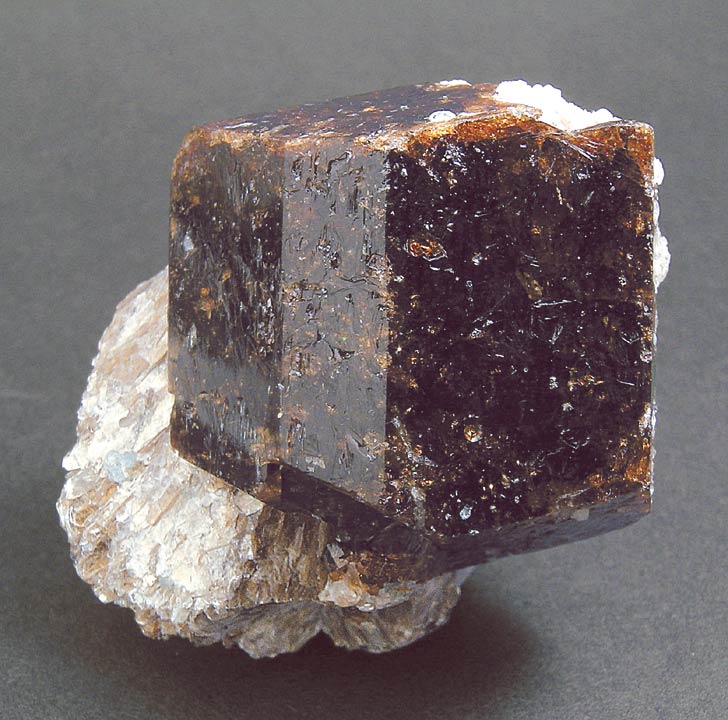
Tourmaline vs. the bomb

OK, loyal readers, it is Saturday night, and those of you without small children should be out watching action movies or something. If you aren’t lets pretend you are, just for this blog post. In the action movie that you aren’t watching right now, the heroine and her hippy dippy sidekick are trying to stop Islamic terrorists from detonating a home-made nuclear bomb on the Washington Mall, where it would damage the astounding geological collection of the Smithsonian*.

Our intrepid duo manages to break into the bomb inside the terrorist safe house, but they are unable to dismantle or remove it before they have to clear out. In a fit of desperation, our heroine yanks off the sidekicks hippy dippy tourmaline necklace, and lodges it between the subcritical spheres (terrorists don’t have the engineering savvy to build an implosion device), in hopes that the tourmaline will stop the neutrons.

As our intrepid duo makes a dash for their getaway combi, you all, being sensible nuclear geochemists, ask yourselves: Is that realistic, or crap?

Qualitatively, tourmaline contains structural boron, which is a decent neutron absorber. Using diamonds would have been crap, of course, but our sidekicks socio-economic and cultural background might have saved us there.

Fortunately, your movie theatre is equipped with envelope backs.

What is the relationship between the neutron capture cross sectional area of the boron and the crystallographic structure of the tourmaline? Let us look at the basics.

The simplest tourmaline compositional endmember is dravite: NaMg3Al6(BO3)3Si6O18(OH)4 (don’t ask about the complicated ones).


Assume that the neutron capture cross section of everything except 10B is zero.

There are three formula units per unit cell, so that will be 9 boron atoms.

Boron is 19.9% 10B, so 9 x 0.199 = 1.791 10B atoms per unit cell.

Great. How well does it stop neutrons?

The 10B neutron capture cross section is about 3825 barns.

What is a barn? 10-28 square meters, or 10-8 square angstroms.

So ignoring any overlap, our unit cell of tourmaline should have 3825 x 1.791= 6869 barns, 6.8x10⁻²⁵ square meters, or 6.8x10⁻⁵ square angstroms. How big is the unit cell?

Since our envelope has access to webmineral.com, we can get the crystallographic information for trigonal dravite. And it turns out that the unit cell is 7.2 angstroms high, with an area of 220 angstroms. So the cross sectional area (per unit cell) of 6.8x10⁻⁵ divided by 220 square angstroms gives us a ratio of 3.12x10⁻⁷. Roughly speaking, that is the fractional change of the neutron being adsorbed per unit cell. One part in 32 million. It is not a very large number.

Luckily for us, though, our hippy dippy sidekick is not a Transmission Electron Microscopist, so his necklace is not thinned down to a few unit cells. Our 7.2 angstrom C axis means that a 1 mm length will have 1.39 million unit cells in it. Multiplying that by our chance per cell, we get 1.39x106 x 3.12 x 10-7 = 0.43. So 1 mm of tourmaline should block a bit less than half the neutrons.

A bit of internet shopping** says that a 50 buck pendant will be on the order of 10x40 mm, so it should actually be a fairly effective neutron shield. The bomb will fizzle, the world will be safe for geologists and hippies, and y’all can enjoy the rest of your weekend.

ERRATUM:
It has been pointed out to me that the thermal neutron capture cross section is not appropriate for fast neutrons that occur in a nuclear weapon (it's a bomb, so there is no time to slow the neutrons down to a nice speed). As a result, the effective cross section of boron in this situation would be much smaller (less than a barn), and there would be minimal fission inhibition. I apologize for vaporizing whomever was in DC last weekend.

But as we watch the mushroom cloud drift slowly across the Potomac, it is worth using this interlude as a teaching moment. The attraction of inter-disciplinary research is that applying techniques and approaches from an established subfield to other unrelated subfields can often result in rapid progress. However, one has to be careful, because as a newcomer to a particular subfield, there may be common traps or problems which which you are unaware. Left undetected, these can have catastrophic consequences.

* Disclaimer. I had a brief post-doc there.
** Note that in addition to the hippy dippy placebo effects, the online crystal monger does not mention that tourmalines are effective shielding against thermal neutrons. They don't know what they're missing.